poniedziałek, 21 lipca 2025

diamond painting

Opis obrazu:
Motyw: Młoda kobieta o delikatnej, bajkowej urodzie w stylu azjatyckim lub fantasy. Ma długie blond włosy, ozdobione ozdobami, trzyma w dłoniach lampion lub świecę. W tle widać kwitnące gałązki wiśni oraz bajkowe stworzonka.

Kolorystyka: Dominuje pastelowy błękit, róż, fiolet, brzoskwiniowy oraz złote akcenty.

Styl: Ilustracyjny, inspirowany mangą lub sztuką fantasy.

Hard to Kill: Rasputin and Other Immortals

This article explores the fascinating stories of people who, against all odds, managed to survive dramatic, seemingly hopeless situations. The focus is on Grigori Rasputin, whose life and death have become legendary, and whose extraordinary resistance to poison and injury is astonishing. Alongside him, the story of Kenyon Tuthill, a police officer who survived a gunshot wound to the face, demonstrates that the human will to survive can be astonishing even in the most extreme circumstances. These stories prompt reflection on the fragility of life and the mysteries of the human body.If you think about it, the human body is quite fragile. Maybe not as fragile as movie makers try to portray, but still far more durable than many other life forms on this planet.

Movies try to make you believe—at least in the case of faceless thugs—that you can die instantly with a good, swift kick to the shins. But if you were a hero (or antihero), you could even survive a nuclear explosion and emerge unscathed.

In real life, of course, it's different. Introducing foreign objects into your body, especially sharp ones, is definitely not advisable. Generally, it's a good idea not to end things with bullets, and most people will tell you not to store knives in your stomach (or back, but that's a story for another article).

The average person has about five liters of blood. This is roughly 7% of their body weight, so the larger you are, the more red tissue you have to carry. Of course, if you experience a leak, you'll have a problem. The same average person can—theoretically—easily survive a loss of 10-15% of their blood (about 1.5 liters), but losses above this limit become risky.

Contrary to popular belief, however, piercing your internal organs with a bullet doesn't necessarily result in death. What actually kills you is the blood loss that leaks through all those holes. Yes, there are other things that happen during the bullet wound, but as your brave sidekick will tell you, you have to stop bleeding.

But you realize that all of this is happening based on the best-case scenario, right? Well, maybe not necessarily the best-case scenario—after all, you just got shot. However, there are many people who defy the rules of survival—people who not only laugh in the face of death, but go all out.

Perhaps the most famous and stunning story of such a mocker is that of Grigory Yefimovich Rasputin. However, his story is often misinterpreted.

Rasputin, whom you've undoubtedly heard of, was something of a sensation in Russia in the early 20th century. This most controversial figure was said to be one of the most powerful faith healers who ever lived—and depending on your question, he was also an occult oddity; he was certainly the most influential spiritual guru of the time. In addition, he was a trusted advisor to the tsars and, according to historians, a key catalyst in the downfall of the Russian monarchy.Volumes of books have been written about his life, character, and death. Contrary to popular belief and some films, Rasputin was certainly mortal. Although he certainly clung to this world when the Tsar's family decided to end him You've probably heard the short version: he was poisoned, shot, beaten, and finally drowned at a party in his honor. However, lest you misunderstand, that wasn't how people celebrated in Russia back then. No, it was Rasputin's benefactors, fed up with his meddling in political affairs, who decided to put an end to his influence.

Rasputin's friend (or at least he believed him to be), Felix Yusupov, invited the mystic to a late-night meeting. Let us spare you the details, many of which are disputed – it is known that Rasputin was offered wine and cake laced with cyanide. Most witnesses agree that Rasputin reluctantly drank large quantities of the poisoned wine, though he didn't necessarily have to follow it up with cake. For some reason, however, the toxic drink made little impression on him, except perhaps that he got drunk.

Falling into desperation, Yusupov himself or one of the other conspirators—perhaps Dmitry Romanov—took much more overt measures to eliminate the prude. Rasputin was shot in the left side of the abdomen (in some versions, in the back) and fell to the floor, seemingly lifeless.

Thinking they had succeeded, the conspirators took action to dispose of Rasputin's body, and later came to remove it—only to discover that he was still alive and trying to climb the stairs into the yard. The attempt simply failed, so one of the conspirators, Vladimir Purishkevich, tried again, missing twice and finally hitting Rasputin in the back as he ran. Finally, he was shot in the head and, in an Oscar-worthy manner, collapsed in the snow.

Yusupov, presumably driven mad by the events of the evening, stood over Rasputin with a baton in his hand and began pummeling him about the head and body until he finally exhausted himself. It's hard to believe, but Rasputin was still alive.

Fed up with this endless murder, Rasputin's killers wrapped him in a rug and threw him into the nearby Nina River. Much to the surprise of investigators, when his body was recovered several days later, they discovered traces indicating that Rasputin was still alive and had injured his hands while trying to escape from the ice.

The story certainly sounds incredible, but as already mentioned, his wounds alone would have provided a chance of survival, at least for a short time. Whether he possessed some resistance to the cyanide, or perhaps his hosts had made a mistake, no single event he experienced that night could ultimately have resulted in his death. He only met his end when he drowned.

Rasputin, however, is not the only person to survive after suffering serious injuries at the hands of his attacker.On May 27, 1988, Suffolk County, New York, police officer Kenyon Tuthill was shot with a shotgun by a maniac while sitting in his patrol car. Tuthill was shot directly in the face with the shotgun, which, as you might imagine, resulted in the loss of not only most of his face but also nearly 30% of his head.

Anyone reading this would probably assume that Officer Tuthill's life was over that night, but what if I told you he never even lost consciousness?

The gunman fled the scene immediately after firing the shot, presumably believing the officer was dead, but Tuthill was still alive. The officer called for help on his CB radio, though with most of his mouth gone, he could only utter inarticulate moans. He underwent nine hours of life-saving surgery that day, and his attacker was eventually caught and imprisoned for life.

Officer Kenyon Tuthill survived something unimaginable – since the incident, he has undergone more than seventeen facial reconstructive surgeries and was featured in the 1991 documentary "Ultimate Survivors: Winning Against Incredible Odds," hosted by William Shatner.

These two stories seem to contradict what we read daily in the news headlines. People are killed so often, sometimes in such seemingly benign ways, and almost always for no good reason. Our bodies are damaged on every level, and at first glance, there seems to be no logic to who survives and who dies. The story of Rasputin usually sparks discussions of magic, sorcery, and alchemy, but when an ordinary police officer named Tuthill survives such massive injury through sheer willpower, magic seems unnecessary. One thing is certain, however: of all the ways to destroy life, killing one another is the worst.

Where human knowledge ends, God steps in.

This article shares the remarkable story of Juliet N., who was diagnosed with HIV after a brutal attack in Uganda. Struggling with depression and severe symptoms, she found hope in prayer led by Pastor Simeon Kayiwa, who claims to have the gift of healing. After intense prayer, Juliet's test results improved, and her story not only sparks controversy but also forces us to reflect on the limits of medicine and the belief in miraculous healings.

AIDS, or Acquired Immunodeficiency Syndrome, is a disease that is currently incurable. We all know this. A person diagnosed with HIV must prepare for inevitable death.

The human form of HIV is said to have originated in Africa. In Kenya and Uganda, cases of HIV infection through heterosexual contact are very common.

Juliet N., a 17-year-old employed by the American Immunization Service, was attacked and raped one evening in July 1989 in Uganda by a Black man with AIDS. When she was diagnosed with HIV, she became depressed and contemplated suicide. In early 1990, she developed a cancerous skin lesion called "Kaposi's sarcoma." She began experiencing chronic headaches and malaria-like symptoms. So many sores appeared on Juliet's tongue that she could no longer eat or drink.She didn't confide in her family about her tragedy, so—weighing 38 kg—she began wearing long-sleeved shirts and pants to conceal her skin irritations. Eventually, she sought help from Pastor Simeon Kayiwa (pictured with one of his patients), known for his many miraculous "healings." When she entered his home and stood before him, she fainted. Pastor Kayiwa revived her and reportedly said, "Only God can help you." He then began praying fervently, which, Juliet says, lasted almost half a day.

A few days later, Pastor Kayiwa told Juliet about his dream vision. In the dream, God showed him a mountain that suddenly began to shrink until it disappeared completely. He explained, "This is how AIDS will disappear from your body ," the pastor reportedly said. He then asked her to get a progress test and bring him the results. After a few months, it turned out that the virus count in Juliet's body had decreased! Another HIV test came back negative. After some time, Juliet began to gain weight. It was a miracle, because the disease had taken half her family.Juliet's only surviving sister, also ill, contacted Pastor Kayiwa in 1992. Juliet says she is now well and goes to the hospital twice a week to pray for the sick. Prayer is now the most effective medicine I know.

Pastor Simeon Kayiwa is the founder of the Narimembe Christian Brotherhood. He claims to have healed hundreds of children through the power of prayer. The forty-eight-year-old priest was once a lecturer at the Faculty of Arts at Makerere University. It was then that he was said to have received the gift of healing from God. Finally, the rector called me to his office and told me to choose between God and the university. It wasn't a difficult choice. Pastor Kayiwa has reportedly cured at least thirty AIDS patients, as well as many others with various ailments and conditions.

One such person is nurse Irene Naija, who had a large goiter. It disappeared after Sister Naija prayed with her pastor. On the day of her surgery, the goiter was gone.

When asked if spontaneous remission could have occurred, Dr. Jane Bosa, director of Makerere Academic Hospital, responded with two questions: why did the remission have to wait until Irene met with Pastor Kayiwa? And why was it necessary to pray first?

This report is just another confirmation of the words spoken by John, Juliet N.'s personal physician - Where human knowledge ends, God steps in...

The first miracle in post-war Poland

In July 1949, in war-ravaged Lublin, a phenomenon occurred that shocked both the local community and the communist authorities. Sister Barbara Sadowska noticed a tear of blood dripping from the image of Our Lady of Częstochowa, attracting crowds of believers eager to witness the miracle. However, the events quickly began to raise concerns among the authorities, who took steps to suppress the religious fervor. Conflicts between supporters and opponents of the miracle led to riots that significantly impacted the atmosphere in postwar Poland.The year was 1949. War-ravaged Lublin was slowly rising from its ruins. The city's natural landscape was ruins, dug-up streets, exposed building foundations, piles of wire, and scaffolding. On July 3rd, Sister Barbara Sadowska, praying before a replica of the image of Our Lady of Częstochowa, saw something extraordinary: a tear of blood was rolling down the Madonna's cheek!
Sister Sadowska immediately informed the sacristan Józef Wójtowicz about the whole event, and soon afterwards the other priests as well.

Soon, the church was filled with crowds of believers from all over the city. As Father Tadeusz Malec later stated, the people's exultation, moaning, and weeping were so powerful that I, too, fell to my knees and, along with the people, was moved to tears... At 10 p.m., the priests, maintaining a profound skepticism, closed the main doors of the church and led the remaining believers out through the sacristy. However, the singing at the foot of the church continued all night.

Pilgrimages from outside Lublin arrived the next day. The line to see the miraculous image stretched throughout the Old Town, extending beyond the Krakow Gate. The story of the weeping Madonna was already being talked about in shops, on the streets, and in workplaces, while the BBC and Voice of America broadcast special reports.The authorities step in

The communist authorities were also agitated by the Poles' suddenly revealed religiosity . Militia patrols were deployed on the city's outskirts, and the PZPR City Committee dispatched a group of provocateurs . Bolesław Bierut and Joseph Stalin were kept informed about the events in Lublin.

All steps were immediately taken to suppress this incomprehensible phenomenon before the holiday falling in the second half of July. A statement from the Polish Writers' Union, signed by its chairman, Jarosław Iwaszkiewicz, read: "The Lublin Miracle was a deliberately organized demonstration against the communist regime ." The press also intervened, led by "Sztandar Ludo" and "Trybuna Ludu." A pamphlet, authored by journalist Jacek Wołowski and titled " A Supposed Miracle ," was printed, ridiculing the events in Lublin . According to the pamphlet's author, the miracle was orchestrated by enemies of the party. The main suspects are the episcopate and the reactionary clergy, while the executors of this diabolical project are paid functionaries of parishes .

The measures taken by the authorities, however, proved ineffective – more and more people flocked to Lublin. On July 8th, 8,000 people gathered in front of the cathedral, and on July 10th – 20,000. The head of the Provincial Office of Public Security (WUBP) wrote in a report dated September 28th, 1949: " When driver Adamczyk left Lubartowska Street and entered Krakowskie Przedmieście Street, he encountered a very large crowd of people. (...) After driving a dozen or so meters, he could no longer continue, as the crowd of religious fanatics refused to move out of the way (...)

On July 13th, a young student died in the cathedral square. According to the official version of events, she was struck by a falling roof tile. Panic erupted in the crowd, and the girl was trampled. It's possible this was a provocation by the authorities. Shortly after, another student, Janina Markiewicz, was arrested for distributing leaflets correcting false information published by the press When two forces clash...

The events at the cathedral square divided people into supporters and opponents of the Miracle . On July 17, participants in a protest rally concerning the Miracle clashed with a group of believers leaving the cathedral square. Red flags were displayed on one side, crosses on the other. From one side, chants of "Down with the clergy!" could be heard, while from the other, "We want God!" Clashes with the police ensued, during which 300 people were arrested.propaganda pamphlet reads: " At about the same time, when people brought to Lublin by pastoral letter were standing for hours in the cathedral square... in a deep excavation under St. Anne's Church in Warsaw, "Mostostal" workers, "Betonostal" workers, sewer workers, bricklayers, laborers, foremen, engineers, and scientists risked their lives to save the church... For precisely at that time, when a "miracle" that never happened was being assembled in Lublin, the foundations of a church became disturbingly visible on the WZ route... no priest came to the wives of those who fought underground, who stood on the escarpment with dry lips and sunken eyes waiting for their husbands' return... no rural people were brought there to see the toil with which Poland is being built today. No bishop's limousine passed along the WZ route..."

Well... in the Polish People's Republic, real miracles could only take place on the WZ route, in state-owned farms and during social activities

Padre Pio

Padre Pio, known for his mystical experiences and miraculous healings, underwent an extraordinary experience shortly after his ordination. In a garden, while praying, he saw Jesus and Mary, which resulted in the first stigmata on his hands. For years, he struggled with invisible wounds until September 20, 1918, when he once again received the visible signs of Christ's wounds. Although his stigmata disappeared before his death in 1968, his life and work continue to fascinate many believers today.A month after his priestly ordination, something extraordinary happened to Padre Pio. He was in the garden, praying and meditating in the shade of an elm tree, when Jesus and Mary appeared to him. He suddenly felt a sharp burning sensation in the palms of his hands and saw the wounds of Christ. He ran to Parish Priest Pannullo and said, "Uncle Tore, I beg you, let us pray to Christ to free me from these signs. I desire to suffer, to die from suffering, but let it be hidden." The signs disappeared.

The phenomenon repeated itself a year later. Padre Pio described his suffering this way: "Red spots, about a centimeter in size, appeared in the center of both hands. This was accompanied by a strong, piercing pain, affecting my left hand. I also felt pain under my feet." "From Thursday until Saturday, and also on Tuesday, I experienced immense pain. My heart, hands, feet—as if pierced by a sword—I experienced such terrible pain." Padre Pio prayed for the signs to disappear. And they did. However, they remained invisible.

On September 20, 1918, Padre Pio again, after eight years, received visible signs of Christ's wounds - the stigmata. This is how he himself describes it: "I was sitting in the choir after celebrating Mass when a certain heaviness, similar to sleep, took hold of me. All my internal and external senses, as well as my soul, were immersed in an indescribable peace. While I was in this state, I saw a mysterious figure nearby, similar to the one I had seen on August 5th, with the difference that this one had arms, legs, and side dripping with blood. The sight terrified me. I experienced feelings I will never be able to describe. I felt that I was dying, and would have died if the Lord had not supported my heart pounding in my chest. When the mysterious figure disappeared, I noticed that my hands, feet, and pierced side were dripping with blood. Imagine the torment I experienced then and continue to experience every day. The heart wound bleeds profusely, especially from Friday evening until Saturday morning."

Padre Pio became famous for his miraculous healings and his ability to bilocate (be present in two places at once). He restored sight, health, and strength to many, and helped many in need. To this day, it remains unclear why the stigmata began to fade in the last year of Padre Pio's life and disappeared completely on the day of his death. Padre Pio died in 1968.

sobota, 17 maja 2025

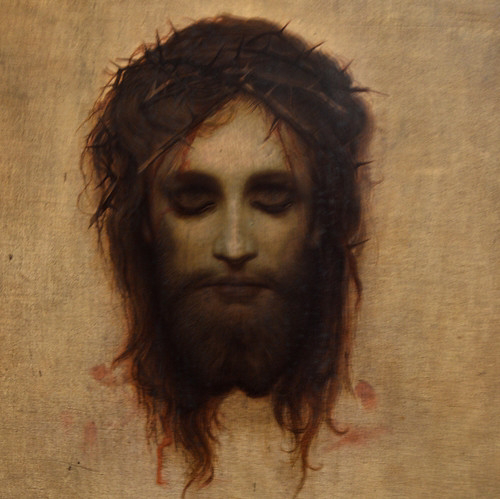
The eyes of God? The eyes of Christ in the painting open and close

A mysterious painting of Jesus Christ, who seems to open and close his eyes, attracts the attention of many visitors to the Handricat Gallery in Pilsen. The owner, Oldrich Klima, emphasizes that the work, painted by an unknown artist, evokes various emotions, from terror to delight. The painting, which is over 150 years old, encourages visitors to reflect on its deeper message.A mysterious painting of Jesus Christ attracts people from all over the Czech Republic. The painting shows the face of the Son of God with eyes that open and close. Many visitors to the "Handricat Gallery" in Pilsen run by Oldrich Klima ask whether it is just a light trick or something more spiritual.

Jesus with closed eyes - this is the figure presented by this 150-year-old oil painting... but is it really?

You only need to take a step back and the Son of God will look at you with open eyes.

"It is truly a mysterious thing. Everyone who looks at the painting agrees that there is something profound inside it. Some people come back again and again to see it again," says the antiquarian Oldrich Klima. The painting, painted by an unknown artist, was once bought by Klim himself. Since he put it up in his shop in Pilsen, he has had many visitors.

"People react to the painting in different ways, some positively, others negatively. When I saw it for the first time, I was terrified. Now I am friendly towards it. It has good qualities and I do not see any evil in it," says Klima.

One viewer of the painting claimed that it depicts both an angel and a devil. No one knows, however, whether this was the artist's intention.

Jesus walked on... ice!

Scientific research suggests that the biblical stories of Jesus walking on water may have their origins in climatic phenomena. Professor Doron Nof of Florida State University suggests that during periods of cooling that occurred in northern Israel between 1,500 and 2,600 years ago, an ice sheet may have formed on the Sea of ​​Galilee. Such ice, capable of supporting the weight of an adult human, could be a rational explanation for the familiar image that appears in the Gospels.

Jesus Christ may not have walked on water as the Bible says, but rather slid across ice that formed during a period of climatic cooling, a scientific study suggests.

Unusual atmospheric and water conditions may have contributed to the formation of an ice cover on the surface of the Sea of ​​Galilee.

The study shows a period of climatic cooling in the area that is now northern Israel that occurred around 1,500 to 2,600 years ago.

Sub-zero temperatures could have contributed to the formation of an ice sheet capable of supporting the weight of an adult human.

"Spring Ice Cream"

The story of Jesus walking on water is recorded in three of the four Gospels, but Professor Doron Nof, an oceanographer at Florida State University (USA), insists that his study has found a more rational explanation for the event.

"If you ask me if I believe someone walked on water, I don't," Nof told Reuters. "I think there was some natural factor that could explain it."

Marzipan

Ingredients Sugar 230 g Water 125 ml Almonds 250 g Icing sugar 220 g Almond extract 1 tbsp Blanch the almonds: immerse them in boiling water...